Aoraki/Mt Cook
20-21st June 2020
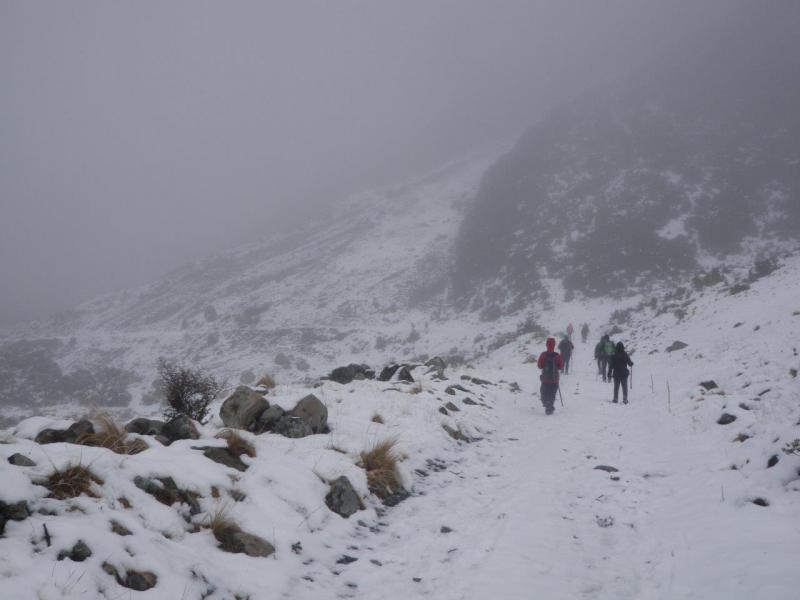
Eighteen people decided it was time to get out and head for the hills and what better place than Mt Cook when there has been a fresh fall of snow. The weather was fine even if somewhat cold.
It was a bit of a social trip but catered for everyone who wanted to get out there. After a leisurely drive with the obligatory stop at the Wrinkly Ram we arrived at Mt Cook carpark and unloaded into the Wyn Irwin Hut which has 16 bunks. We all wandered up the Hooker Valley on Saturday afternoon before settling in for a light tea followed by a very generous shared dessert.
Some of us played a couple of games like Doo Dah, Mancala and Jenga. (Maurice is a lousy liar)
Sunday morning five bods headed up to Sebastopol with ice axe and crampons through and above the fog to some spectacular views and the rest of us wandered up the Tasman valley noticing that as we gained a little height the snow was getting deeper. With the filtered light of the sun through the cloud and mist it was rather atmospheric and very pleasant. After a brief lunchbreak we returned to the cars and had a cuppa at the village before heading home.
Karyl




Exploring Silverpeaks
This trip was meant to go to the Rock & Pillar Range but with the forecast of rain & cloud I decided it was not the best place to be on a day like that.
I looked at the forecast closer to the coast and showers were forecast later in the day so I put the word out that we would be heading to the Silver peaks area. Three hardy trampers met on the Sunday morning in overcast conditions and it was decided to stay in the low part of the silver peaks and explore the river track up to the Philip J Cox memorial hut.
We headed south to Waitati and up Semple Rd and 1 km past the main car park we parked by the start of the Possum Hut route. From here we headed down this track, but instead of following this track all the way down, we veered right and headed down through the pine tree to come out by the Waikouaiti River South Branch a bit further down. From here we crossed the river (no wet feet} to pick up a good track on the other side. I think there is a group of people that maintain these tracks and they do a very good job. We followed this track down past the bottom of Rosella ridge, crossing Cats Teeth creek along the bottom of Hermit ridge. We found what looked to be a good track coming off Hermit ridge and another good track dropping down to the river below, which we would explore in the afternoon to see if it would get us up to Walkers Rd. We crossed another creek which was a great spot with the water flowing over smooth rock and flow into the Waikouaiti River with the bush all around.
It was then a bit of a grunt up a rough track through the bush to meet up with the Yellow ridge track and on to the Philip J Cox hut by 11.45am. Lunch was had here in warm conditions and after a rest and a look around we retraced our steps back to the bottom of Hermit ridge. We took the track we had seen in the morning down to the river thinking it might go up the river to meet up with Walkers Rd track. We knew that it was a long shot because according to the map the Walkers Rd ridge was another 1km up the river and we were right. After bush bashing on the other side for 5 min and not finding any tracks we headed back to the main track. Sure enough further up the track just before Cat Teeth creek we spotted an orange ribbon going back down to the river and another ribbon on the other side which lead into a firebreak. It was then another grunt up through the pine trees to come out on to Walkers Rd. It was then up Walkers Rd and back on to Steep Hill Rd and back to the vehicle and a light shower of rain was starting to fall. All up it was a 16km hike and took 6 ½ hours in warm overcast conditions with a light shower at the end. In the end I think it was a good option and exploring some new tracks in the Silver Peaks.
Thanks to Maurice & Phyllis for their company for the day and I know Maurice is already thinking of exploring the Hermit Ridge Track. Neville


Kurinui Trip Report
Eleven members turned up at the bottom shop in Hampden at 8.30am on Sunday. Thanks to Maurice who organised those who usually meet at the Medway Carpark to go there. We carried on and eventually parked just below the repeater just west of Hampden.
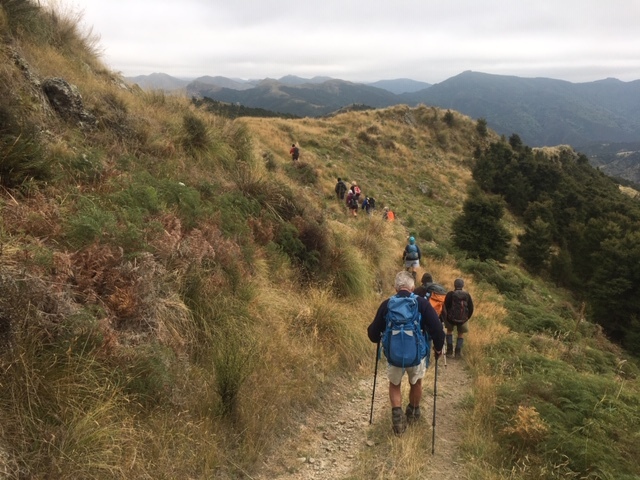
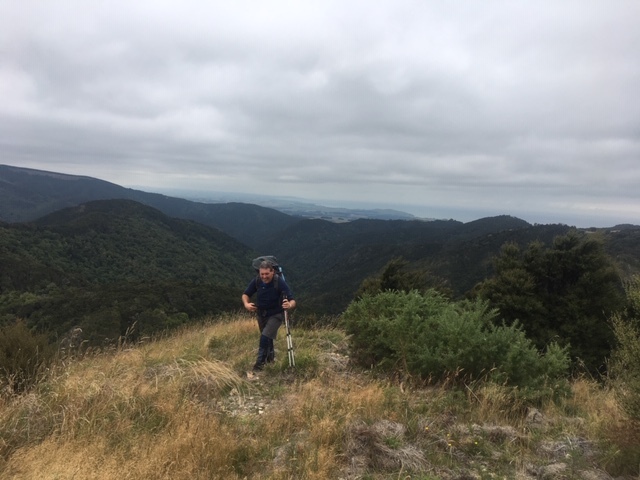
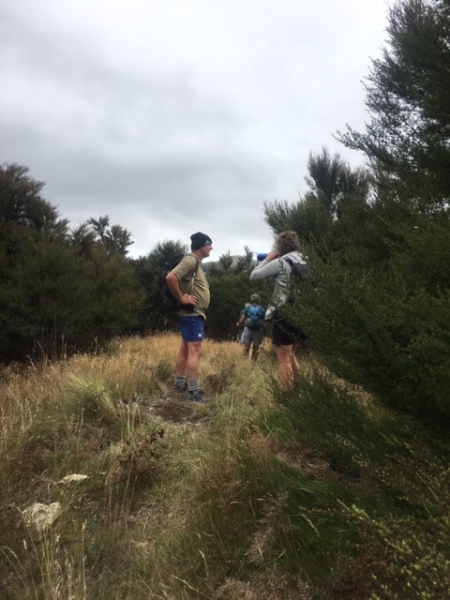
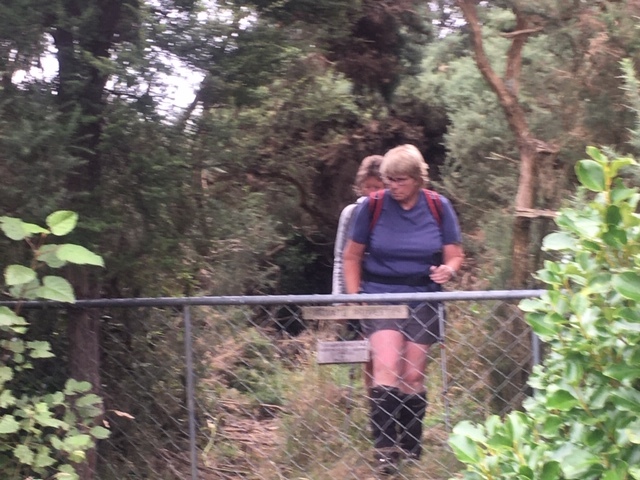
Our walk started by going down Top Track all the way down to Kurinui Creek. The weather forecast was for greyness and that is precisely what we had. Turning up river at the bottom we went as far as the old hut which was locked and we had morning tea there. A timely reminder ensured that everyone had their lunches repacked. Down river now to pick up the track called Reserve Track on the map. This was easy enough to start with following recent track cutting but soon enough we were left with nothing much to follow and became very reliant on the Topogps app on our phones, what a great tool for helping us navigate this tricky terrain which is overgrown with a mixture of regenerating bush and gorse. After reaching some higher altitude and a decent view and a grassy flat we stopped for lunch. Looking around, the evidence of early burn offs could be seen in the revegetation on the hillsides, rocky bluffs and steep sided hills created a remote atmosphere in this location belying its close proximity to civilisation. After lunch we carried on the scramble of trackless travel, stopping only to look at views as they came along in the clearings. Eventually around Pt 405 0n the map we picked up the track again and enjoyed the last part of the walk without constant reference to our map app. The track ended surprisingly suddenly with a gate that required climbing over to get us back on the road and the last 3km walk back to the vehicles. A good day out, made so much easier with the help of our navigation app. Thanks to the drivers for getting us to the spot and back and thanks to those who came, they were;Bill, Nev, Roz, Bron, Bess, Bob, Julia, John, Maurice, Phyllis and Robbie



Club Night March 2020
The Club had three day trips during February.
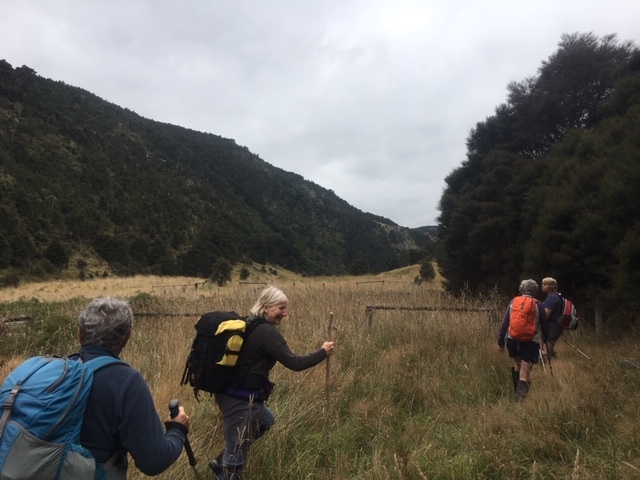
A trip to Hideway Hut in the Ahuriri Valley was enjoyed by 14 trampers, including 5 new members. After crossing the Ahuriri River it was 2 hours to the tarns, where there was an opportunity for a swim on the sunny day. Hideaway hut was reached about 1 pm for lunch. Some went back the same way, while the rest did a circle east and back to the cars.
Orbell’s Cave was reached by five trampers via Orbell’s Creek and a couple of hills. There are actually two shallow caves up on a hillside, one with a meat safe and clothes line, so there must have been a resident not too long ago.
A trip in the Silver Peaks started at the Possum Hut track, going down to the Waikouaiti River, along Catsteeth Creek and Tunnels Track to the Phillip J Cox Hut for lunch. The route back was via a steep uphill ridge to Walker Road and 30 minutes along the road to the cars for a 16k walk.
Coming Trips are to Kurinui behind Hampden, the Otago Anniversary weekend trip to Mt. Alexander on the West Coast, and a Herbert Forest working bee to repair and clear the well used tracks there.
The Wednesday Walkers have had day trips to Roseneath with its spectacular rock formations, Grassy Hills farm near the Stone Wall beside the Waitaki River, Otekaike Hill on a foggy day and a walk from Aviemore Dam to Kurow along the newly opened A2O bike track.
Guest Speaker for the night was Club Vice President, Julian Hardy who spoke and showed photos of his recent tour in China.
It included some walks and bike rides and started in Beijing. 30% of the cars are electric there, which contributed to the low levels of smog seen.
Next stop was Gubei Watertown, a purpose built city built to access the nearby Great Wall by the hoards of tourists. They did a day walk along the wall here.
It was then on to Xian and the terracotta warriors. They travelled by bullet train at up to 290k per hour to Pigan where they saw extensive paddy fields of rice on steep terraced hills.
The Lee River’s spectacular cast landscape of limestone cliffs and hills was well worth seeing and included a bike trip and a river cruise.
The trip finished in Shanghai, a diverse and multicultural city of over 24 million people.
Orbells Cave, Waikouaiti
Sunday 1 March 2020
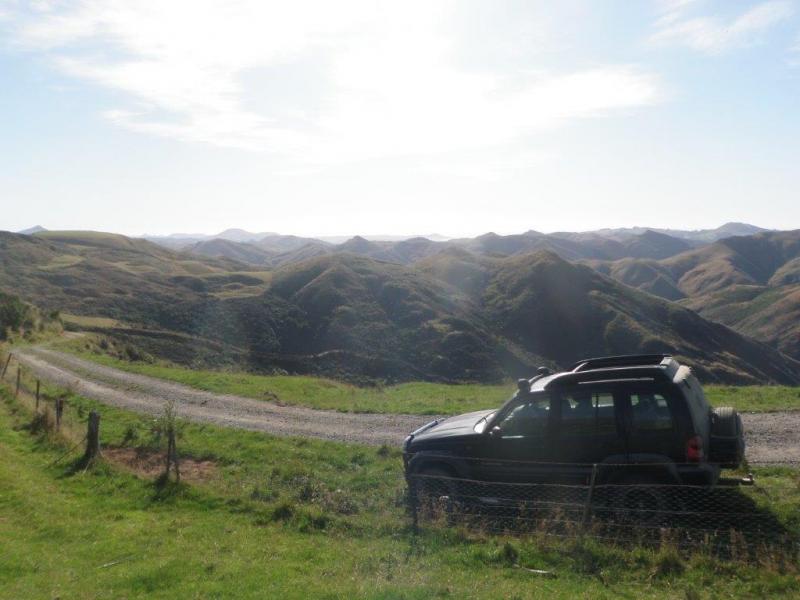
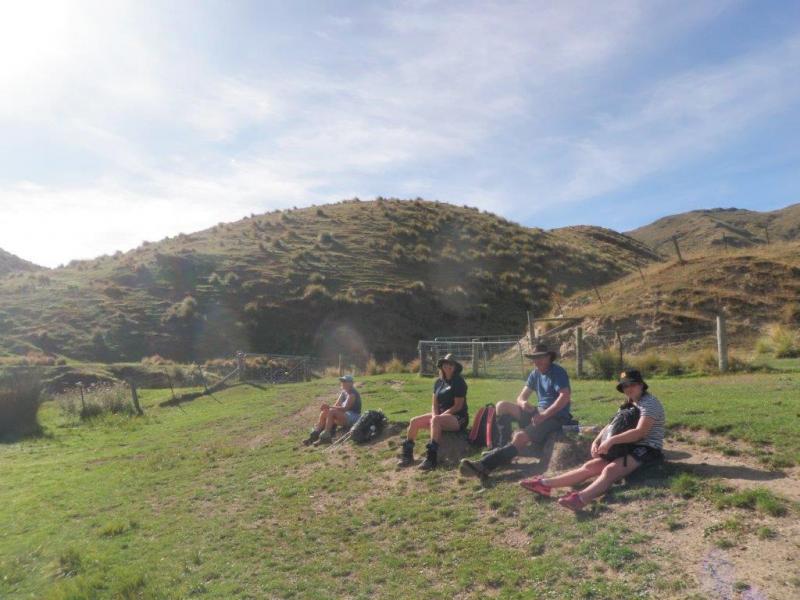
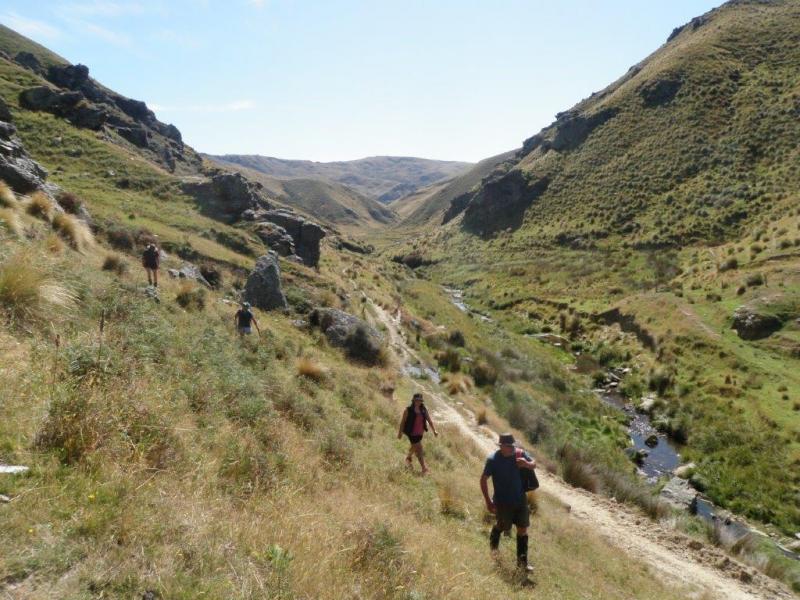
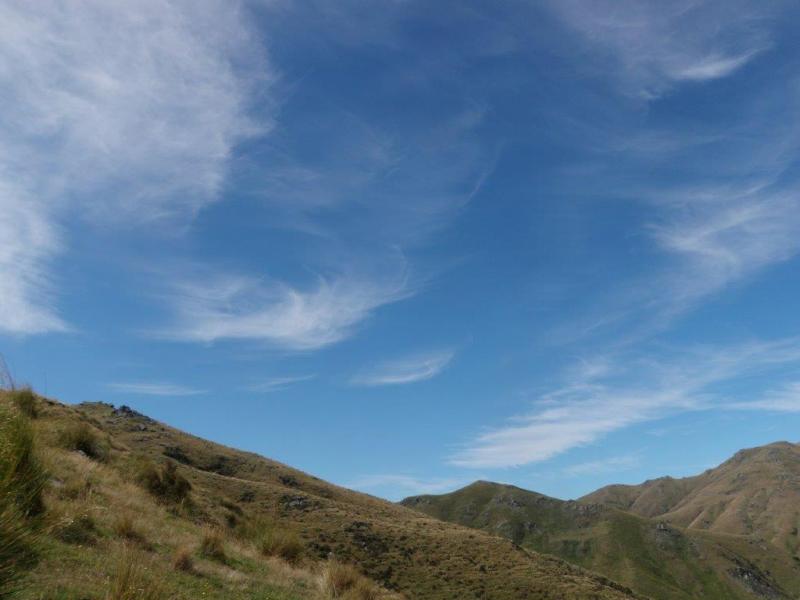
It was a perfect day for tramping: clear blue sky, warm sun, and a light nor-westerly breeze only swinging north-east later in the afternoon. The drive in was long – 97 km, 24 km of which was on gravel roads in behind Waikouaiti. Blucher Road wound tortuously along a ridge south-east from Bucklands Crossing, then turned south to become Lamb Hill Road which wound its way some more to the Bendoran Huts where it became a farm track. We parked by a gate 200 metres before the huts and, just on 10 o’clock, started walking through the gate up a short hill before turning downhill and south-west. The 4wd track we were following wound around the hill before turning down a side stream to meet Orbells Creek at the bottom. It was now 10.45 so we settled down for morning tea on a sunny bank beside some stock yards.
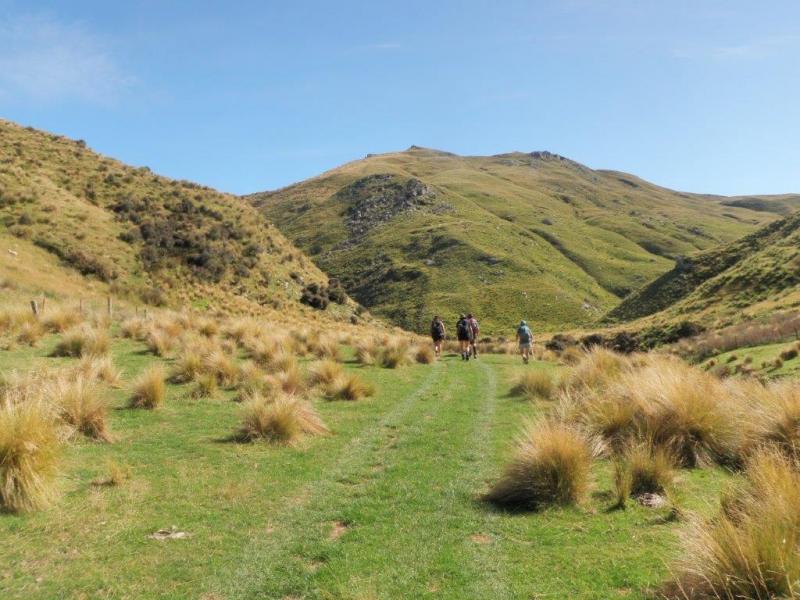
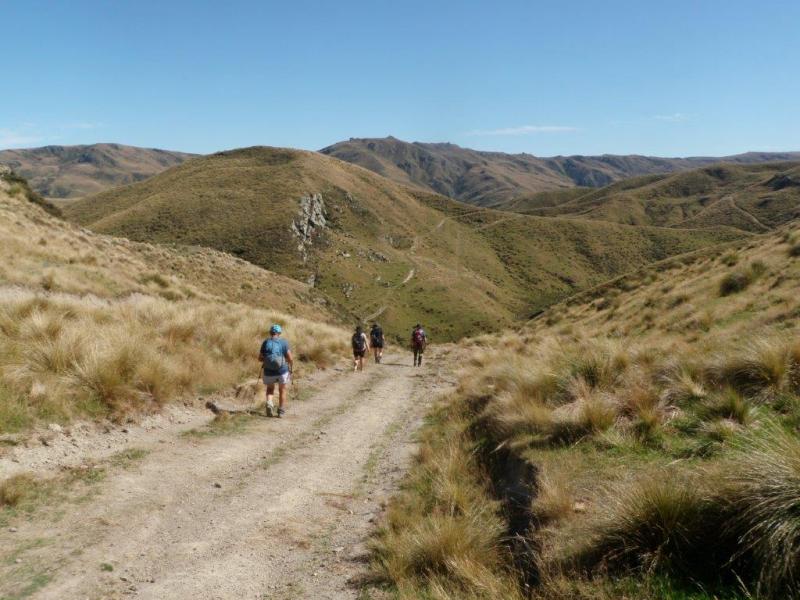
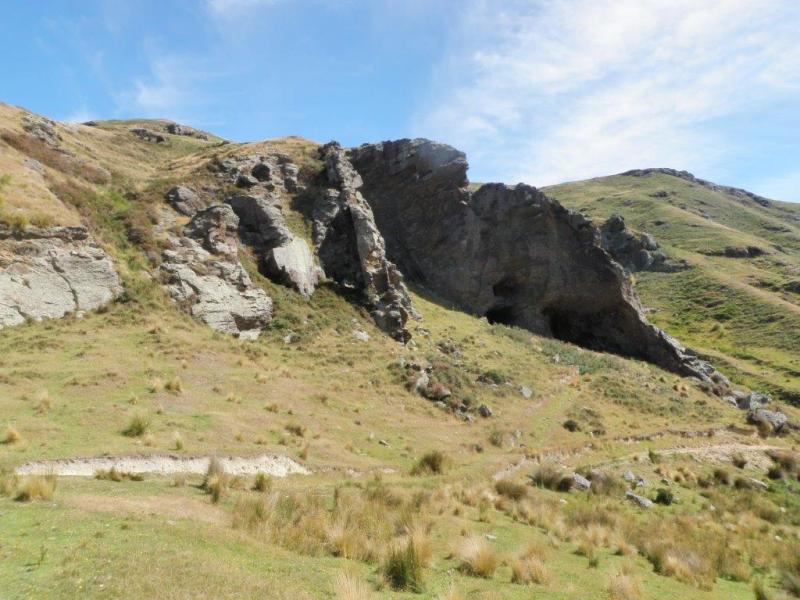
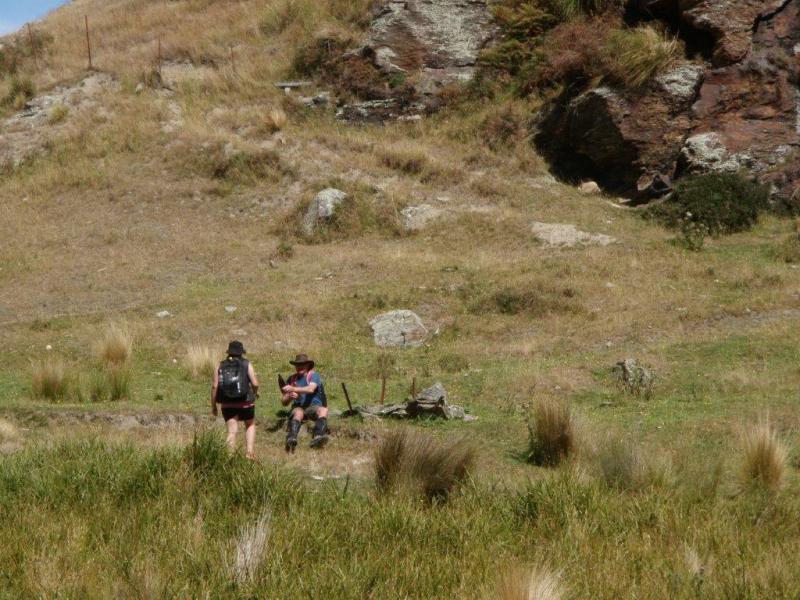
After smoko, the track followed Orbells Creek for half an hour or so before leaving it to climb 200 metres over a saddle, drop down to a side stream, then climb again to another, flattish saddle before the final descent back to Orbells Creek, which had followed a big loop to the south. Reaching the creek, the destination caves could be seen in a prominent schist rock face above the true left. A short walk down the creek, through some yards, across the creek and up a short climb took us to the caves: two large openings in the rock offering airy shelter. One had signs of occupation – an old meat safe and a clothes line. The other had a small spring which watered a small patch of lush grass. Both had clearly provided bedding for livestock, so care was needed in selecting luncheon seating.
We had reached the caves shortly before 1 o’clock and, given the prospect of a 2 ½-3 hour climb back and the long drive home, it was decided not to go further down the valley to the Three O’clock Stream which Orbells Creek flows into and which, in turn, joins the Taieri River near Hindon. So, at around 1.30 we set off on the return journey, stopping to admire the remains of a previous al fresco party before making a fairly leisurely climb back to reach the car at around 4.30. The return to Oamaru was interrupted to enjoy the giant ice creams which are a feature of Hampden. The splendid day in interesting country new to most was enjoyed by Mark, Nicky, Kayla, Bronwyn and John.